
About
Theology Matters
A Reformed publication founded in 1994, committed to clear, confessional theology in service of Christ’s church.
Our Mission
Theology matters because the Gospel of Jesus Christ matters.
The task of theology is to evaluate the church’s proclamation of the Gospel according to Scripture and as attested in the catholic creeds and the Reformed confessions and catechisms of the church, in order to ensure that it is an authentic proclamation of the Gospel and not something other. This urgent work must be done afresh in every age.
Theology Matters exists to equip and encourage, to instruct and inspire, members of the Reformed-Presbyterian family and the wider Christian community through the clear and coherent articulation of theology that is reformed according to God’s Word. It exists to bear witness to the truth of Jesus Christ. Theology makes a fundamental difference in the way we pray, think, and live.
Mission Statement, approved May 16, 2019
Our History
Three decades of equipping the saints
For over thirty years, Theology Matters has sought “to equip the saints for the work of ministry” (Ephesians 4:12).
We were founded in 1994, when several American mainline denominations officially supported an effort to “re-imagine” Christianity and align the church with radically progressive cultural and political movements. Pastors and elders needed a thoughtful, confessional resource for thinking through the theological challenges, temptations, and opportunities of that moment.
That work continues. Each season brings new debates over doctrine, sexuality, polity, and the church’s relationship to the wider culture. In each one, our calling is the same: to bring Scripture, the catholic creeds, and the Reformed confessions to bear on the questions in front of the church today.
What We Stand For
Biblical. Reformed. Evangelical. Thought-provoking.
Biblical
We hold the Scriptures of the Old and New Testaments as the inspired Word of God: the unique and authoritative witness to Jesus Christ.
Reformed
We read Scripture in the company of the Reformed confessions and catechisms, with Calvin and Barth, Knox and the Westminster divines.
Evangelical
We are committed to the Good News that Jesus Christ is Lord, crucified and risen, and that his Gospel is the saving power of God for all who believe.
Thought-provoking
We engage contemporary debates with the seriousness they deserve, refusing both culture-war reflexes and false neutrality.
We stand within the branch of the church’s theological tradition that is biblical, catholic in its creeds, Protestant in its evangelical commitment, Reformed in its confessions, and Presbyterian in its government. Our editorial work is rooted in those commitments rather than in any partisan or cultural alignment.
What We Publish
Three ways we serve the church
The Journal
Our quarterly print publication, mailed free to anyone who requests a copy. Each issue brings together essays from pastors, scholars, and church leaders on a single theme.
Subscribe to printArticles
Web-first commentary on contemporary church debates, biblical interpretation, and pastoral theology. Published throughout the quarter between print issues.
Read our articlesThe Institute
The Institute for Theological Education offers continuing theological education for pastors, elders, and lay leaders, with scholarship support available.
Visit the Institute
Leadership
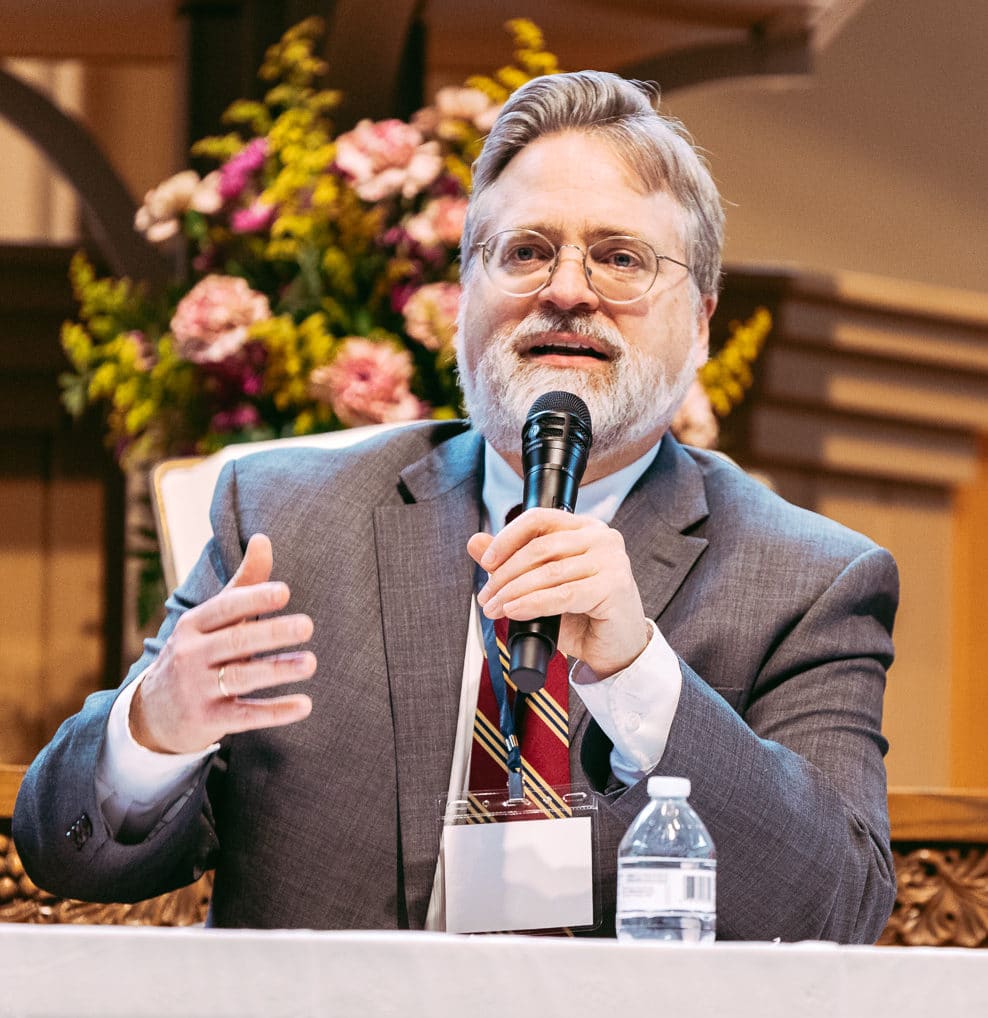
Executive Director and Managing Editor
Dr. Richard E. Burnett
An ordained pastor, scholar, and author, Richard is the Co-Director of the Master of Arts in Reformed Theology Program at the University of Dubuque Theological Seminary, the Executive Director of the Foundation for Reformed Theology, and has been the Executive Director and Managing Editor of Theology Matters since 2016.
Richard grew up in Charlotte, North Carolina. He graduated from King College, Bristol, Tennessee and received his M.Div. from Princeton Theological Seminary. He spent a year studying at the University of Tübingen, Germany, returning to be ordained as Associate Pastor of First Presbyterian Church in Bristol. He later earned an S.T.M. from Yale Divinity School and a Ph.D. in Systematic Theology from Princeton Theological Seminary.
In 2002, Richard joined the faculty of Erskine Theological Seminary, where he won the Allison Award for Excellence in Teaching in 2006, was granted tenure in 2008, and served until 2016. He has also been Visiting Professor of Theology at Columbia Theological Seminary, Union Presbyterian Seminary, Adjunct Professor at Gordon Conwell, and Visiting Scholar at Princeton. For twenty-five years he has taught Reformed Theology and Church History in the Lay School of Theology sponsored by the PCUSA Presbyteries of South Carolina.
Richard is married to Martha, the daughter of a German Lutheran pastor whom he met in Amsterdam in 1986. They have four grown children and four grandchildren.
Governance
Officers and Directors

Randal C. Working
President

Richard E. Burnett
Executive Director and Managing Editor

James C. Goodloe IV
Vice President

Clark Remsburg
Associate Director

Judith E. M. Rogers
Treasurer

Alan F.H. Wisdom
Secretary
Jerry Andrews
Director
Tim Meredith
Director

Thomas A. Miller
Director
David J. Wood
Director

James F. Cubie
Director

Sue Cyre
Executive Director Emeritus


Board of Reference
Our Board of Reference is a group of theologians and church leaders who endorse Theology Matters and support its vision and mission.
- Dr. F. Dale Bruner Whitworth University, retired
- Rev. Dr. Andrew Dearman Fuller Theological Seminary, Texas
- Dr. James R. Edwards Whitworth University, Washington
- Rev. Dr. Daryl Fisher-Ogden Dean, Abraham Lincoln University
- Rev. Dr. Robert Gagnon Wesley Biblical Seminary
- Rev. Dr. Roberta Hestenes Retired, World Vision, California
- Rev. Dr. Donald Macleod Tyndale University, Toronto
- Dr. Richard Mouw President Emeritus, Fuller Theological Seminary, California
- Dr. Mark A. Noll University of Notre Dame, retired
- Rev. Dr. Richard A. Ray Chairman of the Board, Presbyterian Heritage Center
- Mrs. Terry Schlossberg Alexandria, Virginia
Statement of Belief
What we believe
Adopted 1997
We believe in the one living and true God who exists eternally in three persons: the Father, the Son, and the Holy Spirit. We believe that “God is a Spirit, infinite, eternal, and unchangeable, in his being, wisdom, power, holiness, justice, goodness, and truth.”1 We believe that God is our Creator, that he has revealed himself to us through the Scriptures of the Old and New Testaments, and that apart from this revelation we remain ignorant of his name, his nature, and his will.
Therefore, we reject the false doctrine that asserts that the creature has the right to name and define the Creator, or to determine how God should act in any time and place.
We believe that Jesus Christ is God in human flesh. We believe that he was born of a virgin, lived a sinless life, performed miracles, suffered and died on the cross as an atoning sacrifice for our sins, rose again on the third day, ascended into heaven, is seated in glorious authority making intercession for his elect, and that he will return to judge sin and establish his eternal kingdom.
Therefore, we reject the false doctrine that denies either the human or divine natures of Christ, his atoning work, or his exalted Lordship.
“Jesus Christ, as he is attested for us in Holy Scripture, is the one Word of God which we have to hear and which we have to trust and obey in life and in death.”2
Therefore, we reject the false doctrine that asserts that there are other ‘lords’ to whom we owe allegiance.
We believe the Scriptures of the Old and New Testaments to be, by the Holy Spirit, the inspired Word of God: the unique, reliable, and authoritative witness to Jesus Christ and his will for our lives. We believe that the Creeds and Confessions of the church, while subordinate to Christ and the Scriptures, are nevertheless authoritative standards.
Therefore, we reject the false doctrine that declares that the Bible is an ancient document inapplicable to modern life, that God continues to give new revelation apart from Scripture, or that the meaning of Scripture is at variance with the plain meaning of its words understood in their historic context. We also reject the false doctrine that teaches that the plain meaning of the Creeds and Confessions, understood in their historic context, are without authority in the church.
We believe that from every generation and race, God has sovereignly called and redeemed a people for his own glory: “a royal priesthood, a holy nation, God’s own people.”3 We believe that Jesus Christ is alive and present with his people by the indwelling and empowering Holy Spirit whose work it is to regenerate, give faith, justify, sanctify, and give assurance that we are, by grace, at the price of Christ’s shed blood, the adopted sons and daughters of God.
Therefore, we reject the false doctrine that teaches that human beings have the capacity within themselves, by virtue of their humanity alone, and apart from redemption, to become the sons and daughters of God.
We believe that as the people of God, we have been called and commanded to proclaim the good news of salvation through Jesus Christ, to call men and women, boys and girls, to the obedience of faith, and in every generation to reclaim and reform the purity of the Church’s witness.
Therefore, we reject the false doctrine that denies the Church’s call, in every generation, to challenge cultural distortions of the gospel and to witness to the uniqueness of our Lord and Savior Jesus Christ, the one mediator between God and human beings.