 Confessing the Faith
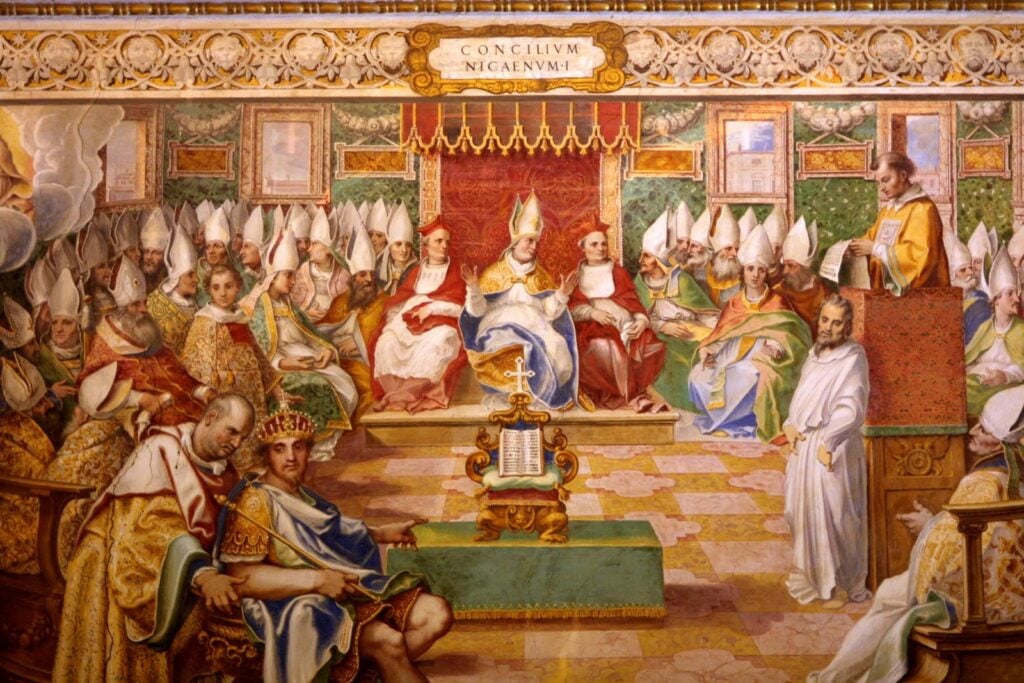
Jerry Andrews explores the Council of Nicaea, highlighting the "apostolic" witness of bishops who bore scars of persecution. This historical reflection reveals how their enduring faith and doctrinal clarity continue to shape the Church today.
 Confessing the Faith
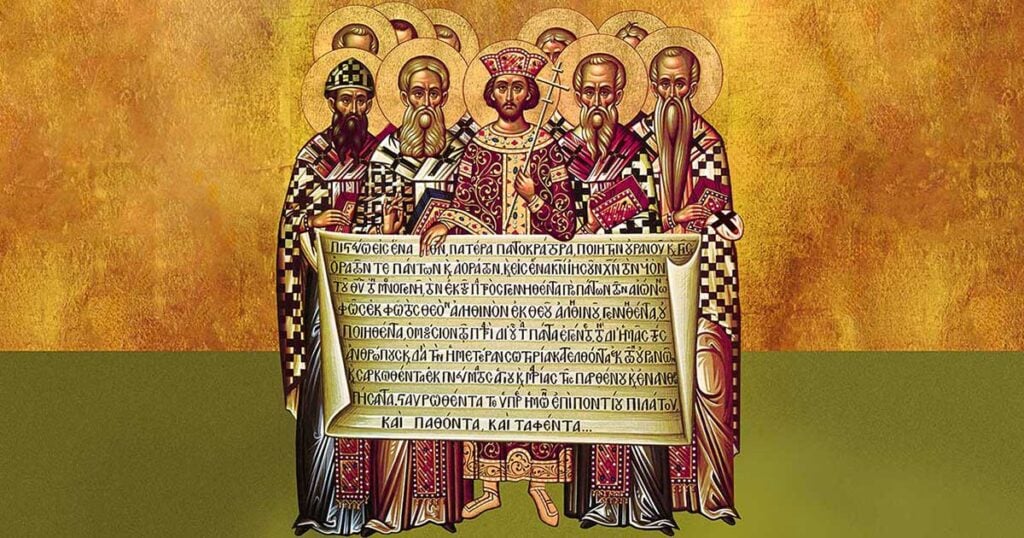
In his article "The Nicene Creed Today, Yesterday, and Tomorrow," Joseph D. Small explores the enduring significance of the Nicene Creed as the "rule of faith." He argues that its affirmations and denials remain essential for contemporary congregational life, providing a communal identity and a biblical core that can deepen the church's faith and mission…
 Confessing the Faith
Forty years ago, in 1984‒85, I had the remarkable experience of spending a year at a Protestant seminary in East Berlin. Those were still the days of communism. The regime was no longer sending Christians to prison camps, but it had pushed them to the margins of society, hoping that someday the church would just…
 Confessing the Faith
The Olympia overture conflicts not only with the church’s traditional position of biblical sexual ethics, but also with our long-held commitment to freedom of conscience.
 Confessing the Faith
The writing of a new confession of faith is not undertaken lightly, for “any proposed change to the Book of Confessions should enhance the church’s understanding and declaration of who and what it is, what it believes, and what it resolves to do (Book of Order, F-2.01).”[i] As a teaching elder who exercises his ministry…
 Confessing the Faith
The fact is confessing Jesus Christ as the way, the truth, and the life [John 14:6] has always been provocative. It’s always been contested. It’s always been eventually opposed. Sooner or later in every culture it has always caused conflict. And nowhere has it been confessed for long without a price.Dr. Richard Burnett - Theology…
 Confessing the Faith
Confessing Jesus Christ as the way, the truth, and the life means he is not merely one truth among others. He is the truth by which all others are measured.
 Confessing the Faith
The unity of the church concerned John Calvin so much that he wrote to Thomas Cranmer on April 1552: “The members of the Church being severed, the body lies bleeding. So much does this concern me, that, could I be of any service, I would not grudge to cross even ten seas, if need were,…
 Confessing the Faith
For over a century, a small gem has been embedded in the Presbyterian Church (U.S.A.) Book of Order: the “Great Ends of the Church.” Six great purposes of the church’s life – the life of every congregation and of the whole denomination.
 Confessing the Faith
Why do we have confessions of faith? There are many reasons. Some are not so obvious. But for Protestants the first and most important reason is simple: We have confessions not because we want to say more than the Bible says. We have them because we do not want to say less.
 Confessing the Faith
Recently the Presbyterian Church (U.S.A.) released the results of a Presbyterian Panel survey entitled “Theological Reflection.” There is some good news in these data, along with evidence of considerable misinformation and confusion.
 Confessing the Faith
Does theology still matter? It may seem like an odd question to ask in a journal that has asserted for more than two decades with the simple proposition of its title that it does. Yet asserting that theology matters does not make it so. And even if it once mattered does not mean it still…
