When Luther posted his theses, Calvin was eight. Small traces the road from a French schoolboy's eventual 'sudden conversion' through Geneva's vote to live by gospel and Word, to the day Calvin meant to spend one night in town and ended up shaping a movement instead.
Pastors are asked to be administrators, therapists, CEOs, organizers, and visionaries, and many are exhausted. Burnett interviews Burgess, Andrews, and Small about their book recovering the ancient practice of a pastoral rule, examining lives from Augustine to Bonhoeffer for what shaped fruitful ministry.
Lectionary preaching protects congregations from their preacher's pet agendas. Lectio continua, preaching consecutively through books of the Bible, was the Reformed alternative recovered from the Fathers. Old answers the practical questions raised by anyone trying to do it now: where to start, how long to spend, what to do with hard texts.
Late medieval worship was overrun with what Calvin called theatrical trifles. Ray follows Calvin's polemic into its sources and stakes, and asks what 'theatrical' looks like in modern Reformed worship that has long since stopped policing itself by the standard Calvin set.
Irenaeus, Gregory of Nazianzus, Chrysostom, Calvin: a remarkable continuity runs through the church's understanding of what pastors are for. Burnett gathers their voices into a single conversation about the care of souls and asks what's been quietly dropped from the trade in our time.
Partee opens with the wry observation that doctrine unites and reason divides, then surveys the rubble Reformed Christians have made of their own family identity. The piece is part lament, part invitation: an honest reckoning with what's been neglected and what still might be retrieved.
The third and final part of Laverentz's series on the elder as shepherd. Drawing on the original 1788 PCUSA Constitution, he sketches what eldering as soul-care could look like in a twenty-first-century congregation, and what's at stake when the office shrinks to corporate-board duties.
Part two of the elder series opens with an 1898 Kansas City session quietly addressing one of their elders' moral failure with the kind of pastoral seriousness modern church courts have largely abandoned. Laverentz reads the case as a lost grammar of shepherding.
Burnett uses Eugene Peterson's lesser-known The Wisdom of Each Other to think about the church as a supernatural community. Peterson's old friend Gunnar shows up after forty years of silence, ready to quit competing with God and join him, and the letters that follow are a quiet education in faith.
Before the Reformation, Catholic worship had no congregational singing and no music in the language people actually spoke. Mills traces how Luther and Calvin recovered the song of the gathered people, and asks whether contemporary churches are quietly drifting back toward the silence the Reformers fought.
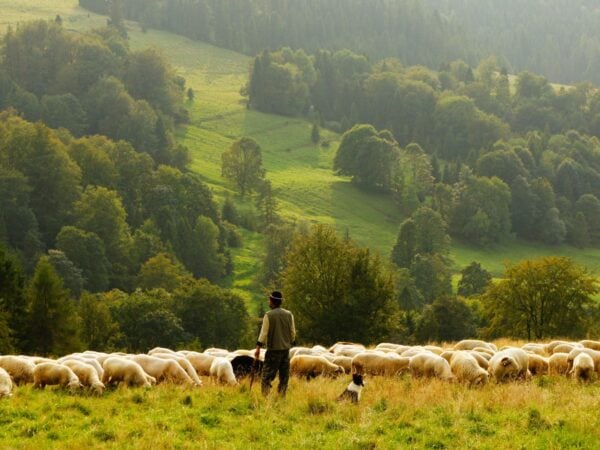
What does it mean to be an elder? Laverentz argues that for most of Presbyterian history, an elder was a shepherd of souls, deeply enmeshed in people's lives. Part one of his series looks at how that understanding has nearly disappeared in a single generation.
PCUSA, EPC, ECO, PCA, OPC: the Presbyterian family in America has become a set of clans that mistrust each other's seminaries, agencies, and theology. Stith calls the hardening 'ecclesial sclerosis' and asks whether anything like a shared Reformed identity survives the fragmentation.