Sixteenth-century Reformers worked in a vacuum where ancient heresies clamored for reconsideration. Finch shows how Calvin held to Nicene and Chalcedonian Christology even while insisting on sola scriptura, and what his way of speaking carefully about Jesus has to teach a church facing similar pressures today.
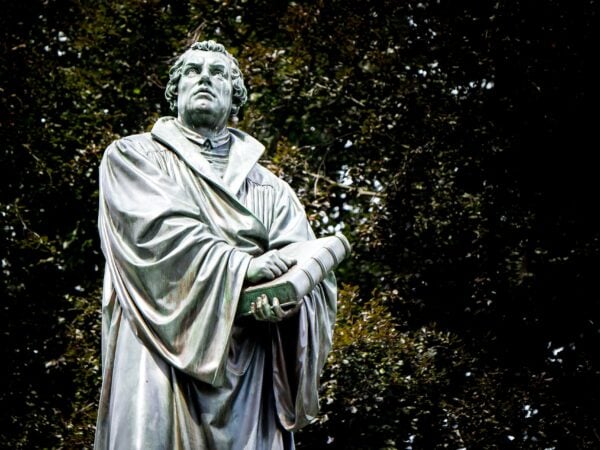
A Reformation Day sermon on Ephesians 2:8-9 that opens with the surprisingly theological politics of tipping. McKechnie uses the everyday transaction to set up the very different logic of grace, and Luther's recovery of it after centuries of religious tipping had buried the gospel.
Any organization needs leaders who know what it exists to do and how well it's doing it. Patterson argues that theology is exactly that knowledge for the church, and that pastors and elders who treat it as optional are quietly steering their congregations toward irrelevance.
Hughes Oliphant Old died in May 2016 at age eighty-three, leaving behind decades of scholarship that shaped Reformed worship across denominational lines. Taylor's tribute traces what Old taught us about how worship has actually been done, and what we lose if his books gather dust.
Ecclesia reformata, semper reformanda gets translated as 'the church reformed, always reforming,' but the original Latin has more bite than that. Bush traces the saying's actual provenance and argues the Reformed tradition's understanding of reform is more disciplined, and more demanding, than the slogan suggests.
Ronald Dworkin's Religion Without God argues that morality doesn't need God, an argument as old as Plato's Euthyphro. Smith reads Dworkin against the way religious believers actually think God relates to moral obligation, and finds the recurring secular case rests on a misunderstanding believers can clarify.
How did the New Testament come to be a single collection of twenty-seven books, distinct from everything else early Christians read? F. F. Bruce examines what historical research can show about the canon's emergence, alongside the historic Christian belief that the Spirit who inspired the books also gathered them.
Metzger walks through the influences that quietly shaped the New Testament canon: which books circulated, which got read aloud in worship, which got cited as Scripture by the Fathers. The story is one of the most important developments in early Christian thought, and history is largely silent about it.
Bart Ehrman and Dan Brown have made the New Testament canon a contested question again, presenting it as a top-down decree imposed on the early church. Hobson goes back to the actual history and shows that councils didn't decide the canon; they recognized what had already become Scripture by use.
Should we baptize infants or only believers? Sprinkle, pour, or immerse? Mills argues with James Torrance that the first question to ask isn't who or how, but what baptism actually does. The Reformed answer reorients the practical debates almost completely.
Christians who hold a high view of biblical inspiration are sometimes most tempted to wring policy prescriptions out of texts that weren't written for that purpose. Wisdom warns against the apocalyptic-prophecy approach to Mideast policy, and recovers a more sober use of Scripture for political discernment.