

Defining the term
You have asked me to speak about orthodoxy. So, let’s begin by defining the term. The term orthodoxy derives from two Greek words: orthos (ὀρθός) which means right, correct, or straight. If you go to an orthopedic doctor, you are going to get your bones, joints, or ligaments corrected or straightened out. The other word is doxa (δόξα), which has a range of meaning. It means ––and is more often taken to mean––belief, teaching, or doctrine. But doxa also means praise, worship, or glory. We sing something called the doxology, which begins: “Praise God from whom all blessings flow.” So, what is orthodoxy. Is it: Right belief or right praise? Right doctrine or right worship? Right teaching or right glory? It’s an important question.
Chesterton’s first lesson
Before trying to answer it, I should mention that I first became interested in the concept of orthodoxy in the summer between my freshman and sophomore year in college when I read G.K. Chesterton’s Orthodoxy. It made a deep impression on me. I’d heard the term orthodoxy growing up, I suppose, but I’d not thought much about it. Yet when I went to college, I heard the phrase, “dead orthodoxy.” I’d not heard of it before. It never occurred to me that there was such a thing as “dead orthodoxy.” But I began to meet those for whom there was no other kind. They spoke of orthodoxy only in derision. To be called orthodox was, to them, a slur. By God’s grace, I had been spared their wounds. My mind had not been poisoned by the idea that doctrine is inherently dry and dull or that orthodoxy is inherently cruel and oppressive. And Chesterton did more than merely immunize my heart and mind. He introduced me to the adventure of orthodoxy.
“The real trouble with this world,” he said, “is not that it is an unreasonable world, nor even that it is a reasonable one. The commonest kind of trouble is that it is nearly reasonable, but not quite.” “Life … is a trap for logicians. It looks just a little more mathematical and regular than it is; its exactitude is obvious, but its inexactitude is hidden; its wildness lies in wait.” Evidence that the world “is nearly reasonable, but not quite” abounds, betraying “a sort of secret treason in the universe,” which “escapes the rationalist, but never escapes till the last moment.” And so it is, Chesterton claims, with Christianity.[1]
Before he became a Christian, Chesterton was bothered by so many contradictions in Christianity. He said, “For not only (as I understood) had Christianity the most flaming vices, but it had apparently a mystical talent for combining vices which seemed inconsistent.” For example: Is Christianity for or against war? On the one hand, you’ve got Jesus saying, “Turn the other cheek.” You’ve got Tolstoy and a long tradition of pacifism associated with Christianity. On the other hand, you’ve got Augustine, just war theory, the Crusades, and the Old Testament, which remains the largest part of the Christianity’s Bible.[2]
The wild contradictions of Christian thought
Is Christianity for or against pleasure? On the one hand, you’ve got the asceticism of John the Baptist and countless monks and nuns. On the other hand, you’ve got Jesus turning water into wine and thanking his Father for food and the good gifts of creation. You’ve got Paul knowing “how to be abased and abound.” And then there is the Song of Solomon. And speaking of which: Is Christianity for or against marriage? On the one hand, Jesus and Paul aren’t married to women and say things that should give one pause before entering hastily into marriage. On the other hand, did any two figures in history ever say more to establish marriage between a man and a woman as a good thing?[3] Later, Chesterton said, “the most extraordinary thing in the world is an ordinary man and an ordinary woman, and their ordinary children.”[4] But before becoming a Christian he couldn’t reconcile so many seeming contradictions.
Is Christianity basically optimistic or pessimistic? Does it teach a naïve sunny outlook or dark “inhuman gloom”? Is life “a nightmare or a fool’s paradise”? Whatever the issue or moral dilemma, Chesterton saw Christianity as always falling off one side or another. But he began to see that Christianity had a knack for combining opposites. It did so by maintaining a balance or equili-brium, but it was, he said, an “irregular equilibrium.”[5]
It was not the balance or equilibrium of Paganism. The pagan mind in the classical era was ruled by a perfectly rational notion of equilibrium or balance, Aristotle’s “golden mean,” wherein truth is always, predictably, in the middle, never a matter of wild excess or extrava-gance, but always a matter of boring moderation, always a matter of weak compromise, which is why the pagan mind simply did not know what to make of the God-Man, Jesus Christ. “Orthodox theology,” Chesterton acknow-ledges, “has specially insisted that Christ was not a being apart from God and man, like an elf, nor yet a being half human and half not, like a centaur, but both things at once and both things thoroughly, very man and very God.”[6]
Athanasius and the cost of Nicaea
Many of you know what was and is at stake in the Nicene Creed and how it came about. A bishop named Arius claimed Jesus was divine in the sense that he was “like” God, that is, he shared a “similar being” or “substance” with God. In other words, he was homoiousios. But another bishop named Athanasius, said No! This is not what the Bible says. The Bible says, “In the beginning was the Word and the Word was with God, and the Word was God.” The Bible says, “He is before all things, and in him all things hold together” (Col 1:17). Jesus said, “I and the Father are one” (John 10:30). “If you have seen me, you have seen the Father” (John 14:9) Therefore, Athanasius asked Arius, “What do you mean that Jesus is “like” God? He is “God of God, Light of Light, Very God of Very God, begotten, not made, being of one substance with the Father.” In other words, he is homoousios, not homoiousios. He is of the same not similar being or substance with the Father.
It cost Athanasius a lot to uphold this teaching. He was exiled five times. His opponents tried repeatedly to kill him. People said he was crazy. They said, “Athanasius, the whole world is against you.” He said: “Then I will be Athanasius against the world, Athanasius Contra Mundum.” Even some of his friends said, “Why are you getting so uptight about this? Why make such a fuss? There is only one Greek letter, one iota’s difference, between homoousios and homoiousios. But Athanasius knew there was a world of difference between saying that Jesus was of the “same being” and of “similar being” with the Father. He knew the truth of the entire Christian faith was riding on it.
When it came to defining the deity of Christ, Athanasius knew that Arius paid more attention to Greek, classical theistic conceptions of deity than to the Bible. So, he asked Arius, essentially, “What do you know of God’s being, Arius?” “How do you know Jesus is of ‘similar being’ with God? How do you know Jesus is ‘like’ God? Who told you what God is like? How can you say Jesus is ‘like’ God unless you already have some idea of who God is? Where did you get it? Where did you get your idea of God, your conception of deity? Did you get it from Greek philosophers or from the Bible? Why don’t you let the Bible tell you who God is, what deity is, what divinity can or cannot do or be?
It can hardly be overstated that Arius’s view––his understanding of divinity––was more popular. It made more sense to more people. It not only made more sense to the wider public. It made more sense to philosophers in the Academy (the one Plato founded in Athens, which would last another couple of centuries).
Thus, it would have been so much easier if the church had said that Jesus was half-god and half-man or a mixture of both. It would have been so much more pleasing to the pagan mind, so much easier for everyone to understand, if the church had sided with Arius and said Jesus was more or less divine but really mostly human or if it had sided with the Gnostics, the Docetists, and Eastern mystery religions and said he was more or less human but really mostly divine. Either one would have been more palatable to pagan sensibilities. But, no, the church said he is both truly divine and truly human at the same time. In other words, Chesterton says, “Christianity got over the difficulty of combining furious opposites, by keeping them both, and keeping them both furious.”[7]
The adventure of orthodoxy
This is where Chesterton introduced me to the adventure of orthodoxy. He writes: “People have fallen into a foolish habit of speaking of orthodoxy as something heavy, humdrum, and safe. There never was anything so perilous or so exciting as orthodoxy.”[8] It is like riding a charging horse, speeding across a battlefield at breakneck speed, buffeted on all sides, careening to the left and then to the right without falling off one side or the other. Or, rather, Chesterton says, it is like riding a chariot behind a team of charging horses:
It was the equilibrium of a man behind madly rushing horses, seeming to stoop this way and to sway that, yet in every attitude having the grace of statuary and the accuracy of arithmetic. The Church in its early days went fierce and fast with any warhorse; yet it is utterly unhistoric to say that she merely went mad along one idea, like a vulgar fanaticism. She swerved to left and right, so exactly as to avoid enormous obstacles. She left on one hand the huge bulk of Arianism, buttressed by all the worldly powers to make Christianity too worldly. The next instant she was swerving to avoid an orientalism, which would have made it too unworldly. The orthodox Church never took the tame course or accepted the conventions; the orthodox Church was never respectable. … It is easy to be a madman: it is easy to be a heretic. It is always easy to let the age have its head; the difficult thing is to keep one’s own. … It is always simple to fall; there are an infinity of angles at which one falls, only one at which one stands. To have fallen into any one of the fads from Gnosticism to Christian Science would indeed have been obvious and tame. But to have avoided them all has been one whirling adventure; and in my vision the heavenly chariot flies thundering through the ages, the dull heresies sprawling and prostrate, the wild truth reeling but erect.[9]
It was this vision of orthodoxy that captivated me: the equilibrium of a man behind madly rushing horses as “the heavenly chariot flies thundering through the ages” and “the wild truth reeling but erect.’ And in describing it all, Chesterton wrote a line I never forgot: “It was only a matter of an inch; but an inch is everything when you are balancing. The Church could not afford to swerve a hair’s breadth on some things if she was to continue her great and daring experiment of the irregular equilibrium.”[10]
This “irregular equilibrium,” I later learned, was balanced on a specific point, “a mathematical point,” you might call it, yet one established not from below but from above precisely where heaven and earth, time and eternity meet in Jesus Christ. I learned this not from Chesterton, but from a Reformed theologian.[11] But I kept thinking about this line, “It was only a matter of an inch; but an inch is everything when you are balancing,” and it dawned on me that this applied not only to Nicea and the homoousios, but to Christian doctrine as a whole, to the study of theology, and to orthodoxy.
Right doctrine and right worship
Do you remember that I began by asking what orthodoxy means? Does it mean right belief or right praise? Right doctrine or right worship? Right teaching or right glory?
We tend to distinguish sharply between the two, don’t we? In fact, modern scholars claim the meaning of orthodoxy is “ambiguous” for this reason.[12] But what is ambiguous to modern scholars was not ambiguous to the ancient church. For the ancient church, right belief and right worship went together and could not be separated. Right teaching and right praise were united and could not be divided.
I don’t know anyone in the history of the church who understood this better than John Calvin. Calvin writes a lot about knowledge of God, and he takes great care to distinguish between “proper” and improper knowledge of God, “pure” and “corrupt knowledge,” “confused” and “clear knowledge,” and “right knowledge of God.” And he says this about right knowledge of God: “all right knowledge of God is born of obedience.”[13] In other words, we cannot truly know God without wanting to obey him. We cannot truly know God without wanting to worship him.
It's common in American evangelical piety to speak about “head knowledge” and “heart knowledge.” But when it comes to knowledge of God, Calvin refuses to draw this distinction. Calvin defines faith as “a firm and certain knowledge of God’s benevolence toward us, founded upon the truth of the freely given promise in Christ, both revealed to our minds and sealed upon our hearts through the Holy Spirit.”[14]
Calvin says true knowledge of God is “not that knowledge which, content with empty speculation, merely flits in the brain, but that which … takes root in the heart.”[15] For Calvin, there is no head knowledge that is not also heart knowledge and there is no heart-knowledge that is not also head-knowledge when it comes to knowledge of God––and so it is for those of us in the mainstream of the Reformed tradition.
Yet many throughout the history of the church have tried to drive a wedge between the head knowledge and heart knowledge. Many have emphasized one at the expense of the other. Many have drawn a wedge between right doctrine and right worship, right teaching and right praise. It happened in the Middle Ages when––despite Anselm’s insistence upon “faith seeking understanding” ––an all-too speculative and rationalistic form of scholas-ticism developed. Eventually, in reaction, Christian mysticism emerged as well as other spiritual and devotional movements which had their influence on the Protestant Reformers, for example, Bonaventure on Calvin and Johannes Tauler on Luther.
The Protestant Reformers had their problems with Medieval Scholasticism. Yet by the end of the sixteenth century, a Protestant Scholasticism had emerged. It was a good and necessary development. There was a lot to think through. More precise definitions were needed. But by the end of the seventeenth century, many sensed something was wrong, something was missing. The Lutheran theologian Philipp Spener complained about the Scholastic theologians. He said what Luther and the Reformers threw out the front door, these guys are dragging in the back door. Spener is “the Father of Pietism.” Whereas scholastics emphasized the mind, reason, and right doctrine, Pietists emphasized the heart, prayer, and right praise. And, of course, many Puritans shared their concerns.
A trail between Word and Spirit
Orthodoxy has always blazed a trail between the movements and counter-movements that have separated Word and Spirit, doctrine and life, faith and reason, right teaching and right praise, or have emphasized one at the expense of the other. Sometimes those who define orthodoxy as right teaching rather than right praise have done so with an attitude, a tone, a swagger that suggests they know better and if you don’t agree with them, you’re just not as smart––as if knowledge of God was an intellectual achievement rather than a gift of grace, as if God and their ideas about God were necessarily the same, as if they had God somehow in their pockets, which suggests the greatest threat to orthodoxy. The greatest threat to orthodoxy has always been the orthodox.
Certainly, we should strive to be orthodox––to follow right teaching and to offer right worship. And if others call us orthodox, we should be glad. We should be grateful. But there’s no need to go around calling yourself orthodox. It’s like calling yourself handsome. You may be handsome. But if you have to go around saying so, you may be overlooking something or you may be paying more attention to yourself than you should––just as those who call themselves orthodox often pay more attention to themselves than to God.
Of course, orthodoxy has also been threatened by those who believe there is no such thing as right doctrine or right worship, just as there is no such thing as truth. And if you ask them if it’s true that there’s no such thing as truth or is it right to teach that there’s no such thing as right teaching, they speak with marbles in their mouth. But a far greater threat to orthodoxy than skeptics has been the pious pragmatists who say Christianity is about ‘Deeds, not creeds, ‘Life, not doctrine,’ or ‘doctrine divides, mission unites,’ as if one was possible without the other, or as if life, mission, or service does not divide, dissolve, and eventually disintegrate without doctrine.
In another book, Chesterton puts it well: “Theological distinctions are fine but not thin. In all the mess of modern thoughtlessness, that still calls itself modern thought, there is perhaps nothing so stupendously stupid as the common saying, ‘Religion can never depend on minute disputes about doctrine.’ It is like saying that life can never depend on minute disputes about medicine.”[16] Tell that to your doctor.
I am so grateful that so many of you are interested in doctrine. The church needs you. The church in America today needs to care far more about doctrine than she has in several generations. And I am thankful that you want to think critically about the faith. I want to encourage you to do so––to think and to reason as rigorously as you can. Reason and logic have their place. Reason is a gift of God, and we should strive to be as rational as possible. But we need more than reason. And, again, it was Chesterton who was among the first to help me to begin to understand this. He says:
The madman and the limits of reason
If you argue with a madman, it is extremely probable that you will get the worst of it; for in many ways, his mind moves all the quicker for not being delayed by the things that go with good judgment. He is not hampered by a sense of humor or by charity, or by the dumb certain of experience. He is the more logical for loosing certainties sane affections. Indeed, the common phrase for insanity is in this respect a misleading one. The madman is not the man who has lost his reason. The madman is the man who has lost everything except his reason.[17]
The madman, he suggests, has a chain of logic that keeps running the same loop, that keeps repeating the same steps in his mind, A–B–C–D; A–B–C–D. His chain of logic is unbreakable. Chesterton continues:
The madman’s explanation of a thing is always complete and, often in a purely rational sense, satisfactory. Or, to speak more strictly, the insane explanation, if not conclusive, is at least unanswerable; this may be observed especially in the two or three commonest kinds of madness. If a man says (for instance) that men have a conspiracy against him, you cannot dispute it except by saying that all the men deny that they are conspirators, which is exactly what conspirators would do. His explanation covers the facts as much as yours. …
The lunatic’s theory explains a large number of things, but it does not explain them in a large way. I mean that, if you or I were dealing with a mind that was growing morbid, we should be chiefly concerned not so much to give it arguments as to give it air, to convince it that there was something clearer and cooler outside the suffocation of a single argument.”[18]
The point is: Reason has its limits. It takes us only so far, if anywhere. We need what gives reason direction and purpose. We need faith, faith seeking understanding, which is why Presbyterians have always cared about the life of the mind.
We have sought to love God not only with our souls and bodies, and with our hearts but also with our minds, which is why we built so many schools and institutions of higher learning. Yet it is never merely about the mind. Calvin says: “the heart’s distrust is greater than the mind’s blindness. It is harder for the heart to be furnished with assurance than for the mind to be endowed with thought.”[19]
Standing firm without standing still
Friends, orthodoxy has sailed on many treacherous seas. It has weathered many dangerous storms. It has endured the winds and waves of temptations from within and without. Between Charbdis and Scylla, it has navigated through many narrow straights, and avoided shipwreck on the shoals of disaster both on the left and the right.
There’s so much to learn from those who’ve gone before us. There is so much they can teach us. We should not think of ourselves as wiser or smarter than they or immune from the temptations they faced. Rather, we should learn from the battles they fought. This is what it means to “honor your father and your mother.”
Yet we should not confuse our battles with theirs. Learning lessons from the past does not absolve us from facing the challenges of the present. Orthodoxy requires that we confess in our own time, our own tongue, and in face of our own temptations. It requires us to take responsibility for faithful words spoken by the church then and there, but to also take responsibility for speaking faithful words here and now.
Orthodoxy has always stood firm, but standing firm does not mean standing still. It has always been on the move, never in retreat, always moving in advance, which means: There is no going “Back to Orthodoxy.” That train has left the station. That horse has left the barn. And you and I are going to have to run fast to keep up.
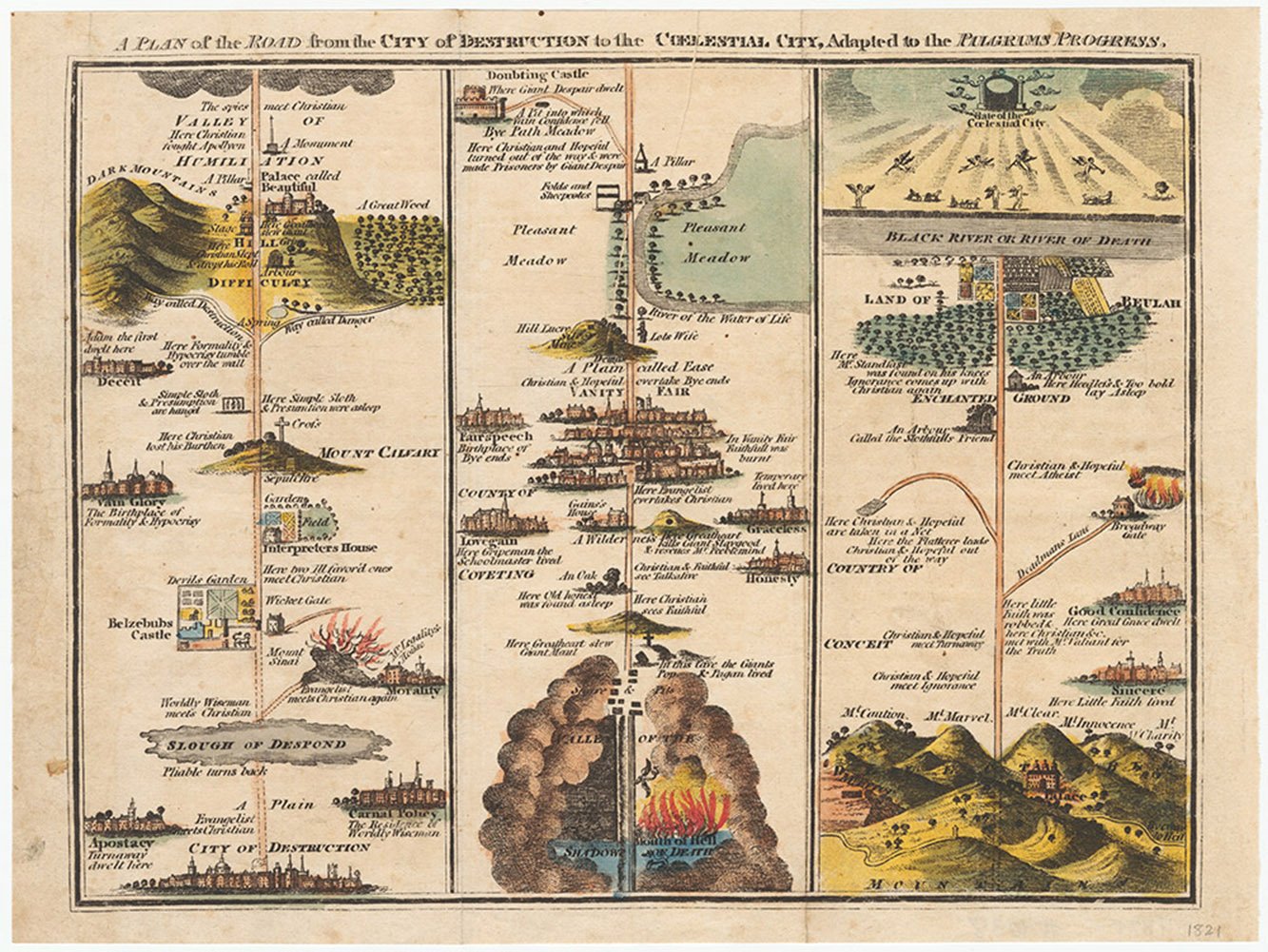
Being orthodox has never been easy. It has always been costly. And given the challenges in the church today, not least in the Presbyterian Church (USA), I cannot promise that you or your congregation will flourish, that you will succeed in any way that the world counts success, or that you will even survive. I can only promise you blood, sweat, and toil. But for those who have sought to follow the path of orthodoxy, for those who have sought to walk the pilgrim road of faith and not fall off on one side or the other, for those who have dared to tread “the straight and narrow way,” to walk the razor’s edge between truth and falsehood, orthodoxy has never ceased to be an adventure.
Notes
- Gilbert K. Chesterton, Orthodoxy (New York: John Lane Company, 1909), 146. ↩
- Chesterton, Orthodoxy, 153, 177–179. ↩
- Chesterton, Orthodoxy, 160–162. ↩
- This statement is widely attributed to Chesterton, but I have not yet found the source of it. ↩
- Chesterton, Orthodoxy, 154–155. ↩
- Chesterton, Orthodoxy, 167. ↩
- Chesterton, Orthodoxy, 174. ↩
- Chesterton, Orthodoxy, 183. ↩
- Chesterton, Orthodoxy, 183–185. ↩
- Chesterton, Orthodoxy, 182. “… whenever we feel there is something odd in Christian theology, we shall generally find that there is something odd in the truth” (150). ↩
- See Karl Barth, The Epistle to the Romans, trans. Edwyn C. Hoskyns (Oxford: Oxford University Press, 1933), 29f.; The Humanity of God, trans. Thomas Wieser (Richmond: John Knox, 1960), 43f. ↩
- “The word ‘orthodoxy’ is ambiguous. It can mean ‘right worship’ or ‘right belief.’” Duncan Forrester, “Orthodoxy,” in Westminster Dictionary of Christian Theology, eds. Alan Richardson and John Bowden (Philadelphia: Westminster Press, 1983), 422. ↩
- John Calvin, Institutes of the Christian Religion, trans. Ford Lewis Battles (Philadelphia: Westminster, 1960), I.6.2. ↩
- Calvin, Institutes, III.2.7. Italics mine. ↩
- Calvin, Institutes, I.5.9. ↩
- G.K. Chesterton, The Resurrection of Rome (New York: Dodd, Mead, and Co., 1930), 61–62. ↩
- Chesterton, Orthodoxy, 30. ↩
- Chesterton, Orthodoxy, 30–32. ↩
- Calvin, Institutes, III.2.36. ↩
 " alt="">
 " alt="">
 " alt="">
 " alt="">
 " alt="">
 " alt="">
 " alt="">
 " alt="">