Middle Eastern Christian minorities have a painful political history, and they've sometimes made the mess worse. Wisdom traces how Arab Christians moved between democratic statesmen like Charles Malik and the nationalist movements that ultimately failed to protect them, and what the record teaches about Christian political alliances.
Evangelical support for Israel is often dismissed as purely theological, a matter of obscure end-times prophecies. Wisdom argues there's plenty of evidence that doesn't require special revelation: a small minority people surviving repeated attempts at extermination is unique enough to read on the surface.
Christians who hold a high view of biblical inspiration are sometimes most tempted to wring policy prescriptions out of texts that weren't written for that purpose. Wisdom warns against the apocalyptic-prophecy approach to Mideast policy, and recovers a more sober use of Scripture for political discernment.
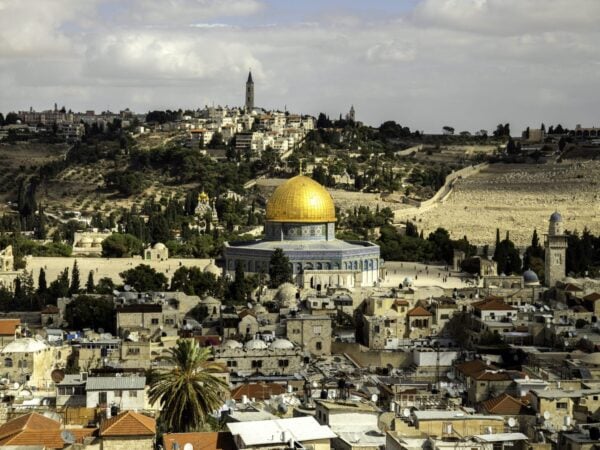
Anyone trying to understand the Middle East has to reckon with the fact that the events of the Bible took place there. Jews, Christians, and Muslims all claim spiritual descent from the same patch of ground. Wisdom unfolds what that overlapping inheritance has produced, and how Christians might think about it.
Sola Scriptura, Solus Christus, Sola Gratia, Sola Fide, Soli Deo Gloria: the five Solas were the Reformers' refusal to compromise. Poteet examines what's been lost when contemporary liberalism quietly trims them, and how the church might restore the lines the Reformers thought load-bearing.
Centrifugal force in physics pushes a body away from the center. Mills uses Buechner's lexicon entry on sin (also centrifugal) to argue that theological boundaries do for the church what asphalt does for a car: not constrict, but keep us from flying off the road into wreckage.
John Spong rejects monotheism, the incarnation, the Trinity, and the atonement, then claims to be a Christian. Cyre asks what content actually distinguishes Christian faith from anything else, and walks through Paul, Athanasius, and the Reformers for the kind of answer Spong's question demands.
1 Corinthians 11 has supplied 'regimental colors' for centuries of arguments about women in worship. Bailey reads the passage in its larger literary context (1 Cor 11-14 as a single essay) and offers a careful answer to what Paul actually meant when he addressed women's prayer and prophecy.
Bailey brings thirty-five years of work on 1 Corinthians to bear on chapter 6's strenuous teaching about sexual practice. Paul wrote the letter for the Corinthians and for everyone everywhere on whom Christ's name is called, and the early church through Calvin agreed: he meant exactly what he said.
Two competing answers to what marriage is: a conjugal union ordered toward the bearing and rearing of children, or a romantic partnership defined by emotional commitment. George argues that the disagreement isn't really about same-sex marriage at all but about whether marriage has any inherent structure to defend.
The 220th General Assembly's overtures to redefine marriage are the next logical step after 2011's repeal of fidelity-and-chastity ordination standards. Wisdom walks through the proposed changes, the constitutional process they would require, and what the church teaches that all of them quietly assume isn't binding.
Aguzzi defines the terms of the euthanasia debate carefully, distinguishes the various forms it takes, and offers a Reformed argument that suffering is not the worst thing that can happen to a person and that physician-assisted death cannot be reconciled with what the Christian tradition teaches about life and death.

 Church and Culture


