 Confessing the Faith
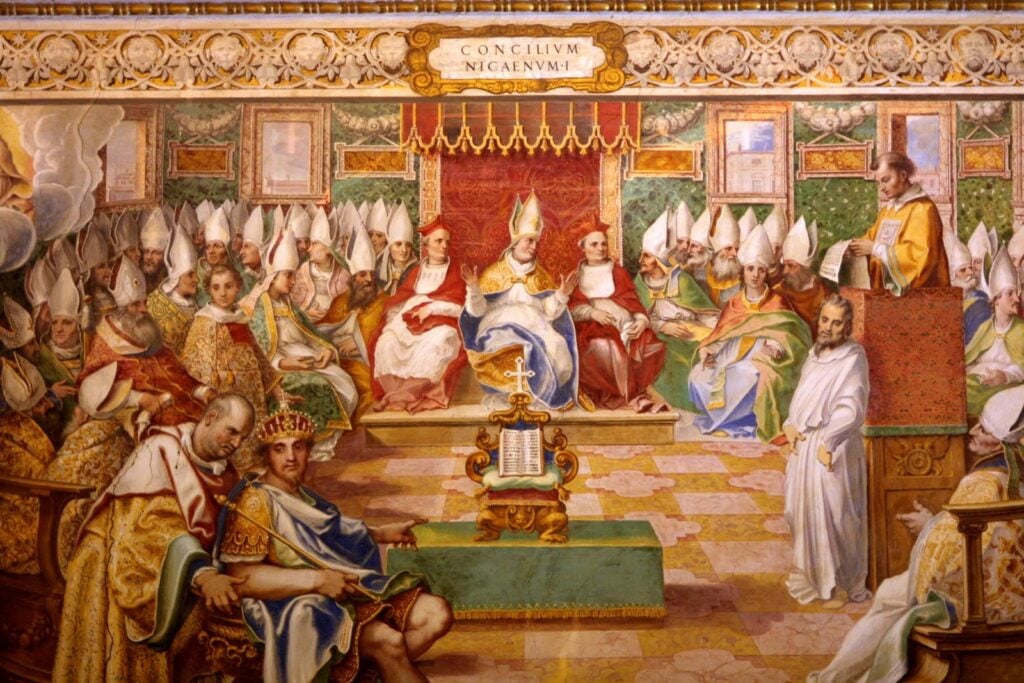
Jerry Andrews explores the Council of Nicaea, highlighting the "apostolic" witness of bishops who bore scars of persecution. This historical reflection reveals how their enduring faith and doctrinal clarity continue to shape the Church today.
 Theology
Though he is beloved by many for his very personal and severely introspective autobiography––the Confessions ––this project was addressed to God alone. And though it introduces a new literary form of individual psychological self-examination, containing thoughts throughout that are profoundly idiosyncratic, Augustine lived in chosen and constant community. He was never alone. This chapter follows Augustine’s…
 Theology
Dr. Edwards delivered this address on Oct. 7, 2021, at Theology Matters’ conference at Providence Presbyterian Church, Hilton Head Island, South Carolina.
 Theology
A collection.
 Theology
Even when we have come to a conclusion about the date and origin of the individual books of the New Testament, another question remains to be answered. How did the New Testament itself as a collection of writings come into being? Who collected the writings, and on what principles? What circumstances led to the fixing…
 Theology
The term "canon" used with reference to the Bible means the collection of books which are received as divinely inspired and therefore authoritative for faith and life. The recognition of the canon of the New Testament is one of the most important developments in the thought and practice of the early church; yet history is…
 Theology
In our modern debates about the Bible, we have tended to quickly assume that we agree on which books belong in the Bible. We no longer have the luxury of that assumption. Books such as Bart Ehrman’s Lost Christianities and Dan Brown’s The Da Vinci Code have raised anew an issue that we thought was…
